
The best caregiver interview questions ask candidates what they did, or would do, in the moments that matter in a client's home. Think of the shift they could not make, the client who refuses help, the family member who asks for something off the care plan. Ask every candidate the same questions, in the same order, and score the answers against a simple rubric.
This list gives you 15 home care interview questions in four groups: reliability, client care scenarios, boundaries, and availability. Each one comes with what a strong answer and a weak answer sound like. After that you'll find the questions you should not ask under EEOC guidance, and a short note on the interview no-show problem.
Key Takeaways
- Use a structured interview. The U.S. Office of Personnel Management says more structure brings higher validity, better rater agreement, and less adverse impact.
- Keep it short. Hellohire's April 2026 platform data put the average caregiver interview at 8.6 minutes.
- Score the answer, not the polish. Augusta's Q4 2025 data found over half of applicants had no professional experience, and PHI reports 40% of home care workers are multilingual.
- Skip questions about age, religion, pregnancy, children, disability, and citizenship. Ask about the job's actual requirements instead.
- Watch for the no-show. Hellohire saw 40.6% of scheduled caregiver interviews end in a no-show in April 2026.
How to Use These Caregiver Interview Questions
Pick six to eight questions from the list, write them on a one-page sheet, and ask them the same way every time. A structured interview is an interview where every candidate gets the same questions, in the same order, scored against the same standard.
The federal government's own hiring guidance explains why it's worth the effort. OPM says "interviews with higher degrees of structure show higher levels of validity, rater reliability, rater agreement, and less adverse impact" (OPM, Structured Interviews). It describes two formats. Behavioral questions ask about past actions. Situational questions ask what someone would do in a job scenario. This list uses both.
Score each answer 1 (weak), 2 (acceptable), or 3 (strong), with one line on why. That lets you compare candidates fairly a week later.
Two facts about the applicant pool should shape how you listen:
- Many applicants are new to paid caregiving. HCAOA's summary of Augusta's Q4 2025 report says "over half of applicants have no professional experience" (HCAOA, April 1, 2026). Accept examples from other jobs, school, or volunteer work.
- Many are working in a second language. PHI reports 40% of home care workers are multilingual, including 23% who report limited or no English (PHI, Key Facts 2025). Judge whether they understood the situation and chose a safe action, not how fluent the answer sounded.
Build the question list from the duties you advertised. If your post promises meal prep, errands, and dementia care, your questions should test those. Our caregiver job description template lists the duties most agencies include.
Reliability and Attendance Questions (1 to 4)
Reliability comes first because a missed shift hurts a client more than almost any other mistake.
1. "Tell me about a time you were going to be late for work. What did you do?"
Strong answer: A specific story. They called their supervisor before the start time, gave an honest arrival estimate, and fixed the cause, such as leaving earlier or finding a backup ride.
Weak answer: "I'm never late." That tells you nothing about what they do when it happens.
2. "You wake up sick at 5 a.m. and your shift starts at 7. Walk me through what you do."
Strong answer: They call the office right away, not at 6:55, and follow the call-off process. They know a client may be waiting alone.
Weak answer: They'd text the client directly, or "see how I feel" first. Both leave your scheduler with no time to find cover.
3. "How many days were you absent from your last job?"
This one surprises owners, but EEOC guidance allows it. An employer "may ask about an applicant's prior attendance record (for example, how many days the applicant was absent from his/her last job)" (EEOC Enforcement Guidance, 1995). What you can't ask is why, if the reason could reveal a disability. Don't ask how many sick days they took.
Strong answer: A plain number and no drama.
Weak answer: Vague dodging, or a story that contradicts their references.
4. "Why did you leave your last job?"
Strong answer: A clear reason that doesn't blame everyone else: hours cut, moved, wanted more consistent shifts.
Weak answer: A long list of bad bosses and unfair clients. With caregiver turnover at 75% (Activated Insights, July 1, 2025), a pattern of short, bitter exits matters.
Client Care Scenario Questions (5 to 9)
Scenario questions show judgment. There is rarely one right answer. Listen for the safe first step, respect for the client, and a call to the office when the situation is beyond the care plan.
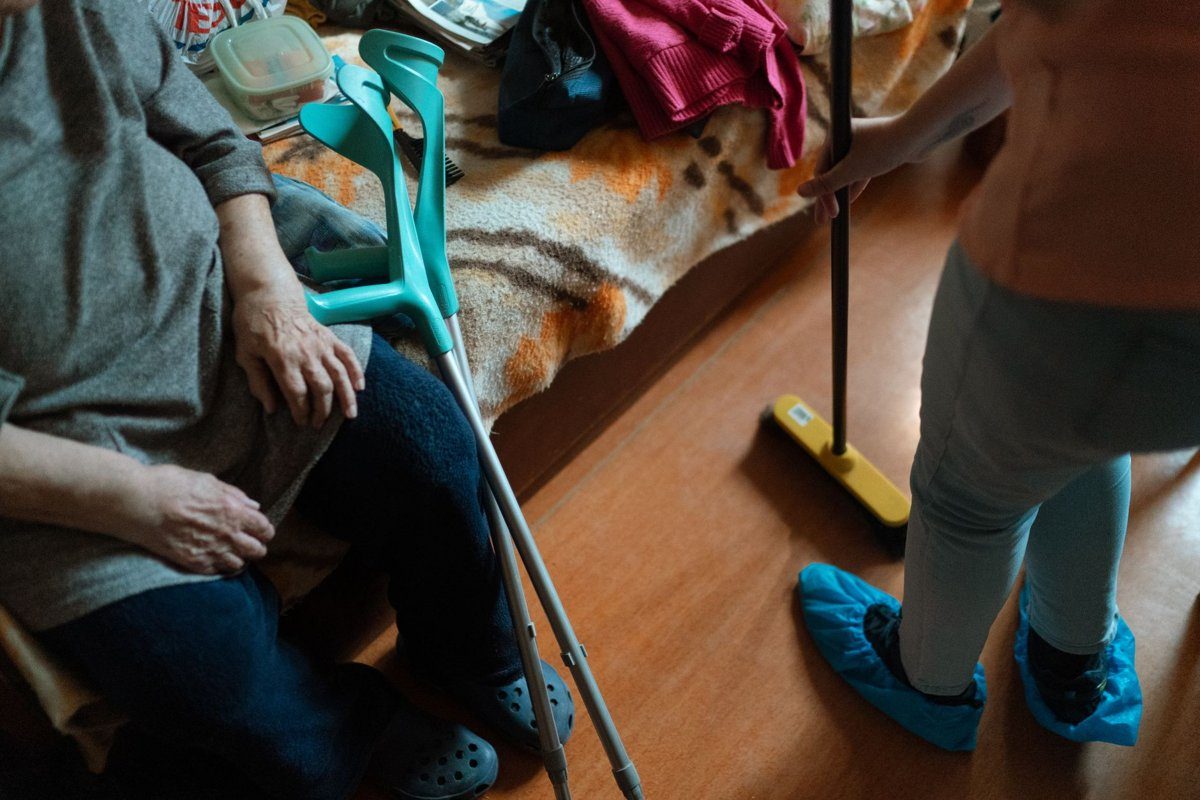
5. "Your client refuses to shower today. What do you do?"
Strong answer: They ask why, offer a choice (later, or a sponge bath), keep the client's dignity, and note it for the office if it keeps happening.
Weak answer: "I'd make her do it," or "I'd skip it and not mention it."
6. "You arrive and find your client on the floor. What happens next?"
Strong answer: They check if the client responds, call 911 if there's any sign of injury, then call the office. They follow agency policy on lifting instead of pulling the client up alone.
Weak answer: They'd lift the client back into a chair and carry on. That is how clients and caregivers both get hurt.
7. "A client with memory loss accuses you of stealing her purse. How do you respond?"
Strong answer: They stay calm, don't argue, help her look for it, and report it to the office the same day.
Weak answer: They'd argue with her, or feel so offended they'd want to walk out.
8. "The client's daughter asks you to give her mom a pill that isn't on the care plan. What do you say?"
Strong answer: They politely decline, explain they can only follow the care plan, and call the office. Many states limit what non-medical caregivers can do with medication, so this is a line they must hold. Check your state's rules.
Weak answer: "The family knows best, so I'd do it."
9. "Tell me about a time you had to stay patient with someone who was upset."
Strong answer: A real example from any setting, like retail, a school, or a church group, with what they said and how it ended.
Weak answer: No example, or a story where they "put the person in their place."
One caution here. Candidates often mention caring for a parent with dementia. Let them share it, but don't probe for relatives' diagnoses. EEOC counts family medical history as genetic information, and "it will usually be unlawful for a covered entity to get genetic information" (EEOC, Genetic Information Discrimination).
Boundary and Honesty Questions (10 to 12)
A caregiver works alone, often with access to cash, cards, and medicine cabinets. These questions check that the candidate knows where the line is.
10. "A client tries to give you $50 as a thank-you. What do you do?"
Strong answer: They thank the client, decline, and tell the office, even if the client insists.
Weak answer: "If she really wants me to have it, it's fine."
11. "A client asks you to drive her to the casino on your day off. What do you say?"
Strong answer: They say no, explain that all visits go through the agency, and mention it to the office.
Weak answer: They'd do it as a favor. Off-the-books work creates liability for everyone.
12. "What would you do if you saw another caregiver being rough with a client?"
Strong answer: They'd make sure the client is safe and report it to the office right away, even if the coworker is a friend.
Weak answer: "It's not my business," or "I'd talk to her first and keep it between us."
Availability and Transportation Questions (13 to 15)
Describe the actual job and ask whether the candidate can do it. That keeps you clear of discrimination rules and gets the answer you need.
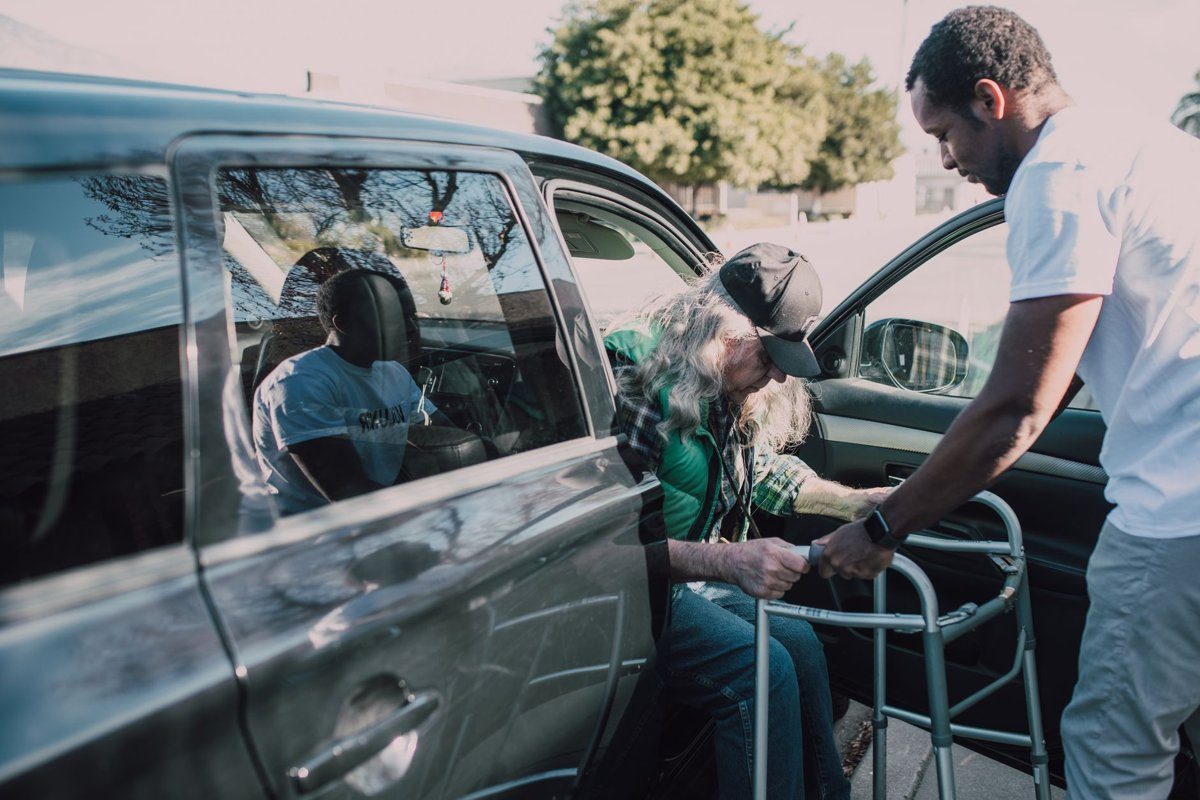
13. "This client needs Saturdays, 8 a.m. to 4 p.m. Can you work that schedule every week?"
Strong answer: A clear yes or no. A good candidate also mentions limits up front, such as "Yes, but not the first Saturday of the month."
Weak answer: "I can work anything," followed by a string of exceptions once hired.
Ask about the shift, not the reason. EEOC says employers should avoid asking about "place of worship, days of worship, and religious holidays" (EEOC, Religious Affiliation or Beliefs).
14. "How will you get to clients, and what's your backup if that falls through?"
Strong answer: A specific plan: their own car, a bus route they've checked, and a backup like a family member's car.
Weak answer: "I'll figure it out." Distance matters too. Augusta found 76% of caregiver hires lived within 20 miles (Augusta, Q4 2025 report).
15. "How many hours a week do you want, and which days work best?"
Strong answer: A realistic number and specific days. You can match them to clients on the first call.
Weak answer: A number far above or below what you can offer, which can signal a poor fit. Schedule matters to candidates. Augusta found more than 56% of caregivers ranked flexible scheduling as a priority (Augusta, Q4 2025 report).
Caregiver Interview Questions You Should Not Ask
Don't ask questions that reveal a protected characteristic. EEOC's rule of thumb: pre-employment questions "should be limited to those essential for determining if a person is qualified for the job" (EEOC, Prohibited Employment Policies/Practices). Protected characteristics include race, color, religion, sex (including pregnancy), national origin, age 40 or older, disability, and genetic information.
| Don't ask | Why | Ask instead |
|---|---|---|
| "How old are you?" or "When did you graduate?" | The ADEA protects people age 40 or older (EEOC) | "Are you at least 18?" only if a legal minimum age applies |
| "Are you pregnant?" or "Do you plan to have kids?" | EEOC says questions on pregnancy, children, and child care may be seen as evidence of discriminatory intent (EEOC) | "Can you work this schedule?" |
| "Do you have any health problems?" | Pre-offer disability questions are barred (EEOC) | "Can you perform these tasks, with or without reasonable accommodation?" |
| "What church do you go to?" | Religious affiliation is generally not job-related (EEOC) | "Can you work Saturdays?" |
| "Are you a U.S. citizen?" or "Where are you from?" | EEOC says most employers should not ask about citizenship before an offer (EEOC) | State that all hires must verify work eligibility on Form I-9 |
| "Have you ever been arrested?" | An arrest "is not proof that they committed a crime" (EEOC) | Follow your state's rules on conviction records and background checks |
The job-function question is the one to lean on. EEOC guidance says employers may ask "whether applicants can perform any or all job functions," including with or without reasonable accommodation (EEOC, 1995). So describe the lifting, the stairs, or the driving, and ask if they can do it.
Title VII generally applies once you have 15 or more employees (EEOC, Pregnancy Discrimination), and many state laws reach smaller agencies. This is general information, not legal advice. Check your state's rules or ask employment counsel.
The Interview No-Show Problem
The best questions in the world don't help if the candidate never shows up. Hellohire's April 2026 data showed 40.6% of scheduled caregiver interviews ended in a no-show, and another 12.2% were canceled (Hellohire, May 1, 2026). March was worse, at 42.5% (Hellohire). Those are figures from one vendor's platform, not a national survey.
Timing is the lever you control. Hellohire reviewed more than 163,000 virtual interview bookings. Same-day interviews had a 60% show rate, falling to 30% at seven or more days (Hellohire, April 15, 2026). The biggest single drop came overnight.

Video is already a common route to a hire. Augusta found in-person interviews produced 54.6% of hires and video interviews 32% in Q4 2025 (Augusta, Q4 2025 report), so a video slot is a realistic way to interview the same day.
A short interview makes same-day slots realistic. Hellohire's April average was 8.6 minutes, so six to eight questions fit. For what each lost hire costs your agency, see the real cost of caregiver turnover.
How We Built This List
This is a research-based list, not the result of interviews we ran ourselves. We started from the situations non-medical caregivers face alone: attendance, refusals, falls, memory loss, money, and scheduling. We then wrote one question for each and described answers using these sources:
- Question design: OPM's guidance on structured, behavioral, and situational interviews.
- Legal limits: EEOC pages on pre-employment inquiries, checked for every "don't ask" item.
- Applicant pool and no-shows: PHI's workforce data, Augusta's Q4 2025 benchmark, and Hellohire's platform reports, each named as that organization's figure.
No vendor paid for a mention. We'll revise this list if EEOC guidance or the benchmark data changes. Spot an error? Contact us and we'll correct it.
Frequently Asked Questions
Should I hire a caregiver with no experience?
Often, yes, if they score well on reliability and judgment. Over half of applicants in Augusta's Q4 2025 data had no professional experience. Strong answers to scenario questions and a solid training plan matter more than a past job title.
Can I ask about criminal history in a caregiver interview?
Arrests and convictions are treated differently. EEOC says an employer cannot refuse to hire someone simply because they were arrested, but can consider criminal records in the final hiring decision. Many states also regulate when and how you ask, and require background checks for caregivers, so follow your state's rules.
Put the Questions to Work
A good caregiver interview is short, structured, and scored. Pick six to eight questions across reliability, scenarios, boundaries, and availability. Then protect the interview itself. Book it the same day the application arrives, offer video, and follow up before the start time. The interview is one step in a longer process, and our guide on how to hire caregivers walks through the rest, from the job post to onboarding.
If your office can't call every applicant back within hours, that's the gap our AI recruiting agent is built for. It calls new applicants in minutes, asks your screening questions, and books the interview in your calendar.